


How a water ionizer works
- 1Tap water in
- 2UltraWater filtration
- 3Electrolysis on platinum-coated titanium plates
- 4Alkaline water from the spout; acidic water to the drain
What is a water ionizer?
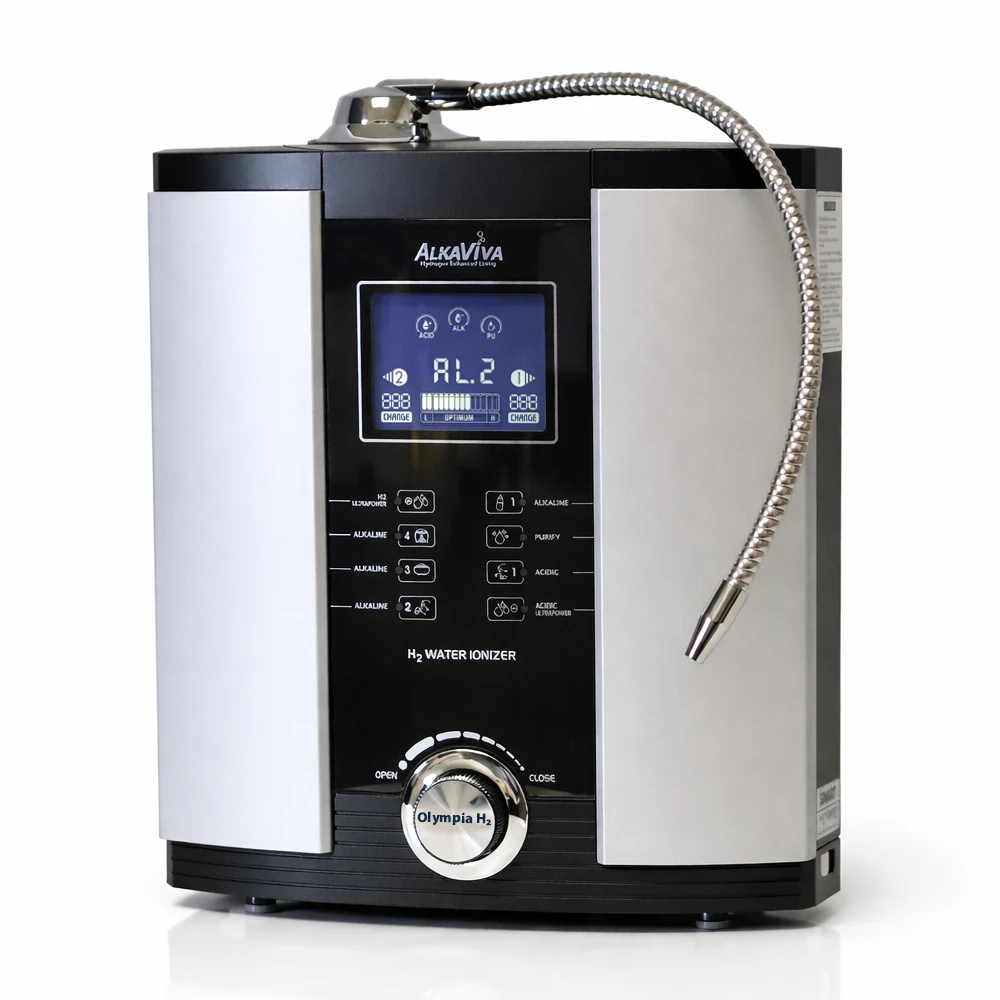
A water ionizer is an electrical appliance that connects to your water supply. Using UltraWater filtration technology and the process of electrolysis, the ionizer transforms ordinary tap water into clean alkaline, ionized, and hydrogen rich UltraWater.
A special attachment re-directs tap water out of the faucet, through the tubing, and into the water ionizer.
This is where the magic happens...
Inside the machine, the water is first filtered through AlkaViva's UltraWater filtration technology. The filtered water then passes into a chamber equipped with platinum-coated titanium electrodes. This is where the electrolysis takes place.
During the process of electrolysis, cations (positive ions) gather at the negative electrodes, creating reduced water (alkaline water). Anions (negative ions) gather at the positive electrodes, creating oxidized water (acidic water).
The reduced, ionized water comes out of the top spout of the ionizer and the oxidized water comes out of a separate hose leading into the sink.
Reduced water is what you use for drinking or cooking. Oxidized water can be used for washing hands, food, or kitchen utensils.
Cations, positive ions, gather at the negative electrodes to create cathodic water (reduced water). Anions, negatively charged ions, gather at the positive electrode to make anodic water (oxidized water). The reduced water comes out of the faucet, and the oxidized water comes out of a separate hose leading into the sink. You can use reduced water for drinking or cooking. The oxidation potential of oxidized water can be relevant to household cleaning of hands, food, or kitchen utensils.
Redox Potential Comparison
Compare these measurements of these three types of water: tap water before electrolysis, the reduced (alkaline) water made with a water ionizer, and the oxidized (acidic) water.
| Water Type | Redox potential | pH | What it means |
|---|---|---|---|
| Tap Water | +400 – +500mV | 7 | Slight oxidation potential |
| Reduced Water | -250 to -550mV | 9 | Strong reduction potential. Hydroxide ions increase alkalinity and concentrate essential minerals. Contains a surplus of hydrogen molecules. |
| Oxidized Water | +700 to +800mV | 4 | Strong oxidation potential, associated with a shortage of electrons. |